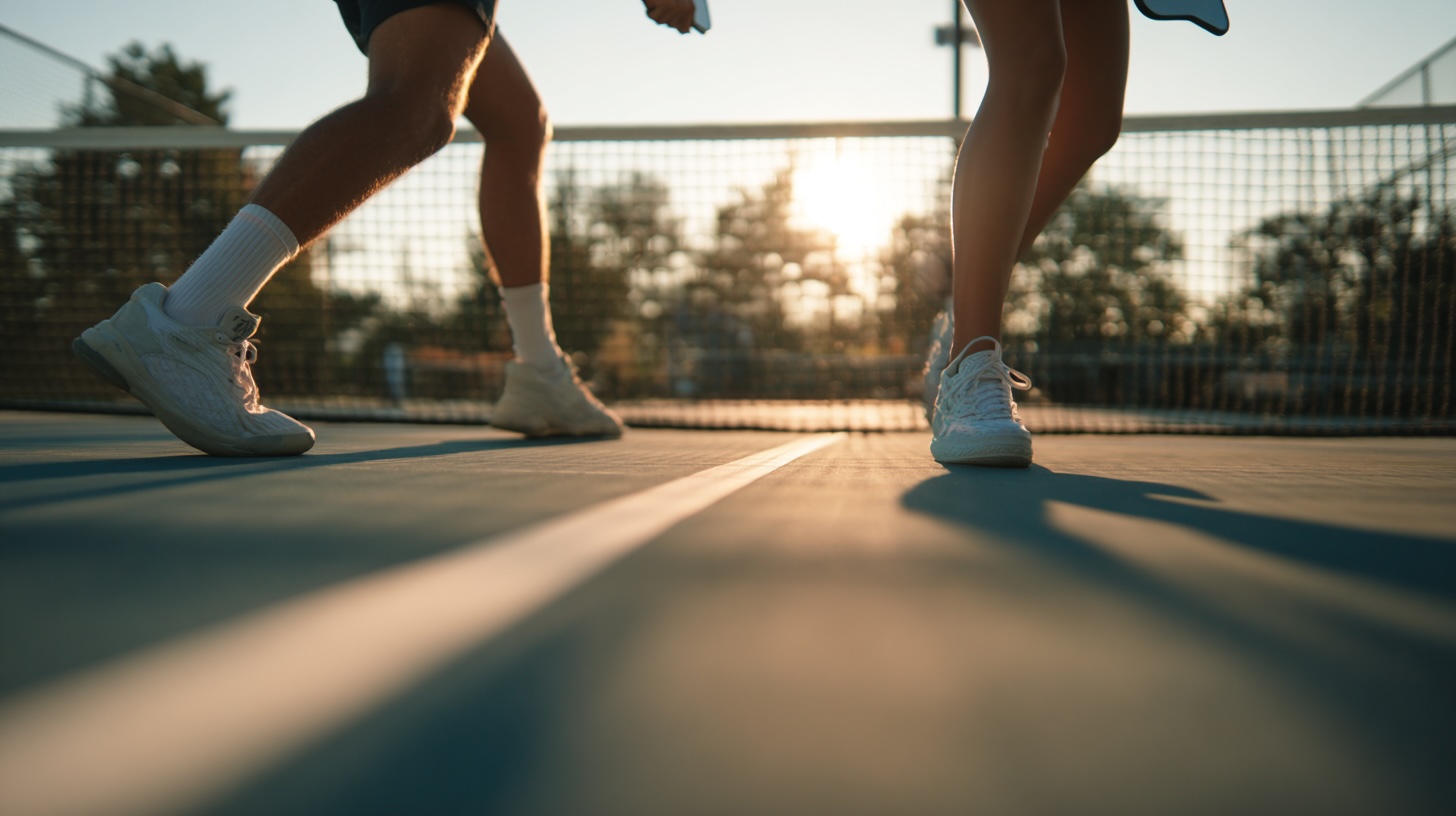
Pickleball is the fastest-growing sport in the United States. The number of players jumped from 4.8 million in 2021 to nearly 9 million in 2023, and that number keeps climbing. Courts that used to sit empty on weekends are packed. Rec centers are converting tennis courts. People who haven’t competed in anything since their 30s are lacing up sneakers and stepping onto the court.
And orthopedic surgeons are busier than ever.
Pickleball-related injuries presenting to U.S. emergency departments increased by 91% from 2020 to 2022, rising from roughly 8,900 to nearly 17,000 annually, according to research published in Arthroscopy, Sports Medicine, and Rehabilitation. Hospital admissions related to pickleball jumped 257% over the same period. Bone fractures tied to the sport have increased 200% over the last two decades, per data from the American Academy of Orthopaedic Surgeons.
The most common injuries: muscle strains, joint sprains, fractures, knee injuries, lower back problems, and Achilles tendon ruptures. The age group most affected: players between 50 and 79 years old, who account for 91% of all injuries.
This isn’t a coincidence. There’s a very specific reason this is happening, and it has less to do with pickleball itself than with who is playing it.
The Real Problem: Returning Athletes Playing Like They Never Left
Most people picking up a paddle for the first time in their 40s, 50s, or 60s aren’t beginners in their minds. They were athletes. They played basketball, tennis, soccer, or softball. They remember what their bodies used to be able to do — and somewhere in their muscle memory, they still think they can do it.
The body, however, has a different memory.
After years (sometimes decades) of limited athletic activity, several things happen:
-
Body composition shifts. People are often carrying significantly more weight than they were during their athletic prime. Every extra pound of body weight translates to roughly 4 pounds of additional force on the knee joint during lateral movement. Carry an extra 15 pounds and you’re putting over 100 additional pounds of stress on your lower leg joints every time you cut, lunge, or change direction.
-
Movement patterns deteriorate. Foot strike mechanics change over time. Many people develop a heel-first gait — perfectly fine for walking, but problematic on a sports court. When you heel strike during an explosive lateral movement or a forward lunge, the Achilles tendon is placed in a fully stretched, vulnerable position. The sudden force of stopping and pushing off from that position is exactly how Achilles tears happen.
-
Toes drift outward. Years of casual walking patterns cause many people to naturally splay their feet outward. On a pickleball court, this altered alignment affects how the tibia and femur move in relationship to each other. When those bones can’t move in proper unison, the stress migrates to the knee — setting the stage for ligament sprains, meniscus issues, and ACL injuries.
-
Explosive capacity has faded. The tendons, ligaments, and supporting muscles that handle quick-burst movements need to be trained for that purpose. Without regular plyometric or lateral movement work, they simply aren’t ready for the demands of competitive pickleball.
What the Surgeons Are Saying
Orthopedic surgeons across the country are taking notice. Clinicians at Cedars-Sinai have described what they’re seeing as “an epidemic of pickleball Achilles tendon injuries.” Research on Achilles ruptures in pickleball players found that 68% of patients tore their tendon within the first month of playing — and nearly one-third suffered the injury during their very first game.
That number should stop you cold. One-third during their first game.
The biomechanics explain it. Recreational players tend to stay upright when moving — feet parallel, weight distributed evenly — which keeps the Achilles under sustained tension. Elite players, by contrast, maintain a low athletic stance with feet slightly outward and weight forward on the forefoot, which distributes force across the entire kinetic chain rather than dumping it into a single tendon.
The pattern repeats across knee and lower back injuries. Players who haven’t built the hip stability, core strength, and lower body conditioning to support aggressive lateral movement are essentially asking structures that haven’t been stressed in years to perform at peak athletic demand.
How to Actually Protect Yourself
The good news is that most of these injuries are preventable. Not through caution alone — but through preparation.
Get leaner before you go harder. This isn’t about aesthetics. Losing 15 pounds of body fat reduces the force on your lower leg joints by over 100 pounds on every cut and lunge. If you’re carrying extra weight and jumping straight into competitive play, you’re asking your joints to handle loads they’re not built for in their current state.
Retrain your foot strike. Practice landing and pushing off from the forefoot — the ball of your foot — rather than the heel. This keeps the Achilles in a more neutral, resilient position and allows the lower leg to absorb impact the way it was designed to. Calf strengthening exercises and targeted footwork drills can accelerate this retraining significantly.
Add plyometric work to your weekly routine. Box jumps, lateral bounds, split squat jumps, and agility ladder drills rebuild the explosive capacity your tendons and ligaments need to handle quick-burst court movements. This isn’t optional if you want to play competitively without getting hurt. It’s the conditioning foundation the sport demands.
Build back gradually. Pride is the most expensive thing on a pickleball court. Don’t lunge for every ball in the first week. Don’t play three hours when you’ve been sedentary for two years. Give your body time to adapt to the movement demands before you ask it to perform at a high level. Live to play another point.
Move like an athlete, not a pedestrian. Stay low. Keep your weight forward. Be ready to move in any direction before the ball is in play, not after. The athletic stance isn’t just strategy — it’s injury prevention built into your posture.
The Bottom Line
Pickleball is a great sport. It’s social, competitive, accessible, and genuinely fun — especially when you’re playing alongside your kids or grandkids. But the injury numbers don’t lie, and the pattern is consistent: people returning to athletic competition without preparing their bodies for it are getting hurt.
The solution isn’t to play less. It’s to prepare more.
At BodyCircuit, we work specifically with the 40-plus athlete who wants to get back in the game — leaner, stronger, moving better, with less pain. The movement patterns, strength foundations, and conditioning work we focus on are exactly what the research says pickleball players need before they step on the court.
If you’re picking up a paddle for the first time in years, or if you’ve been playing and starting to feel the wear — check out what we do before your body makes the decision for you.
Sources: Arthroscopy, Sports Medicine, and Rehabilitation (2025); American Academy of Orthopaedic Surgeons; Cedars-Sinai Medical Center; JAAOS — Journal of the American Academy of Orthopaedic Surgeons (2024)
BodyCircuit